What Astronaut Backgrounds Reveal About Mission Success on the Moon and Mars
What does a typical astronaut look like, and why does that matter for space missions?
Artemis II, NASA’s first crewed mission around the Moon in over 50 years, is often discussed in terms of spacecraft and mission design. But just as critical to its success is the composition of the crew itself. Astronaut selection is not only about individual achievement, it is also about building a team with complementary skills, operational experience, and the ability to function effectively in extreme environments.
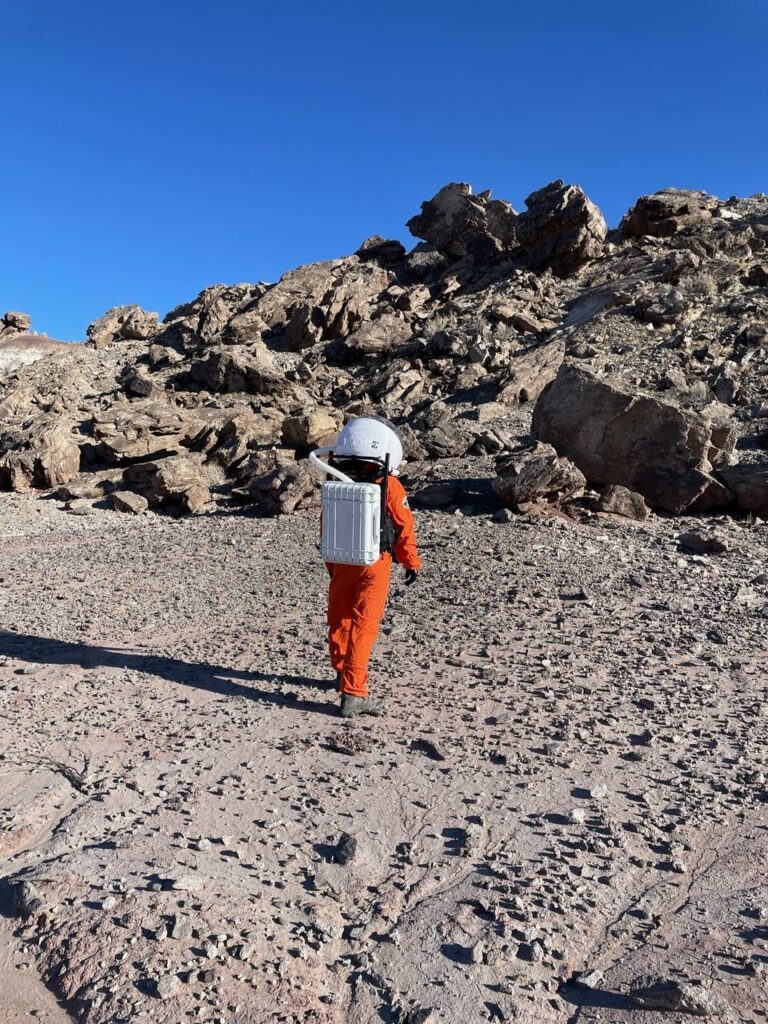
This same principle is central to space analog missions on Earth. At the Mars Desert Research Station (MDRS), crews are intentionally composed of individuals from diverse backgrounds: engineers, scientists, journalists, and medical specialists who must work together to simulate long-duration space exploration. In the Final Mission Summary – MDRS Crew 315 (May 2025), for example, the crew included members with backgrounds in engineering, science, and communications, all contributing to mission objectives and daily operations.
The Artemis II Crew
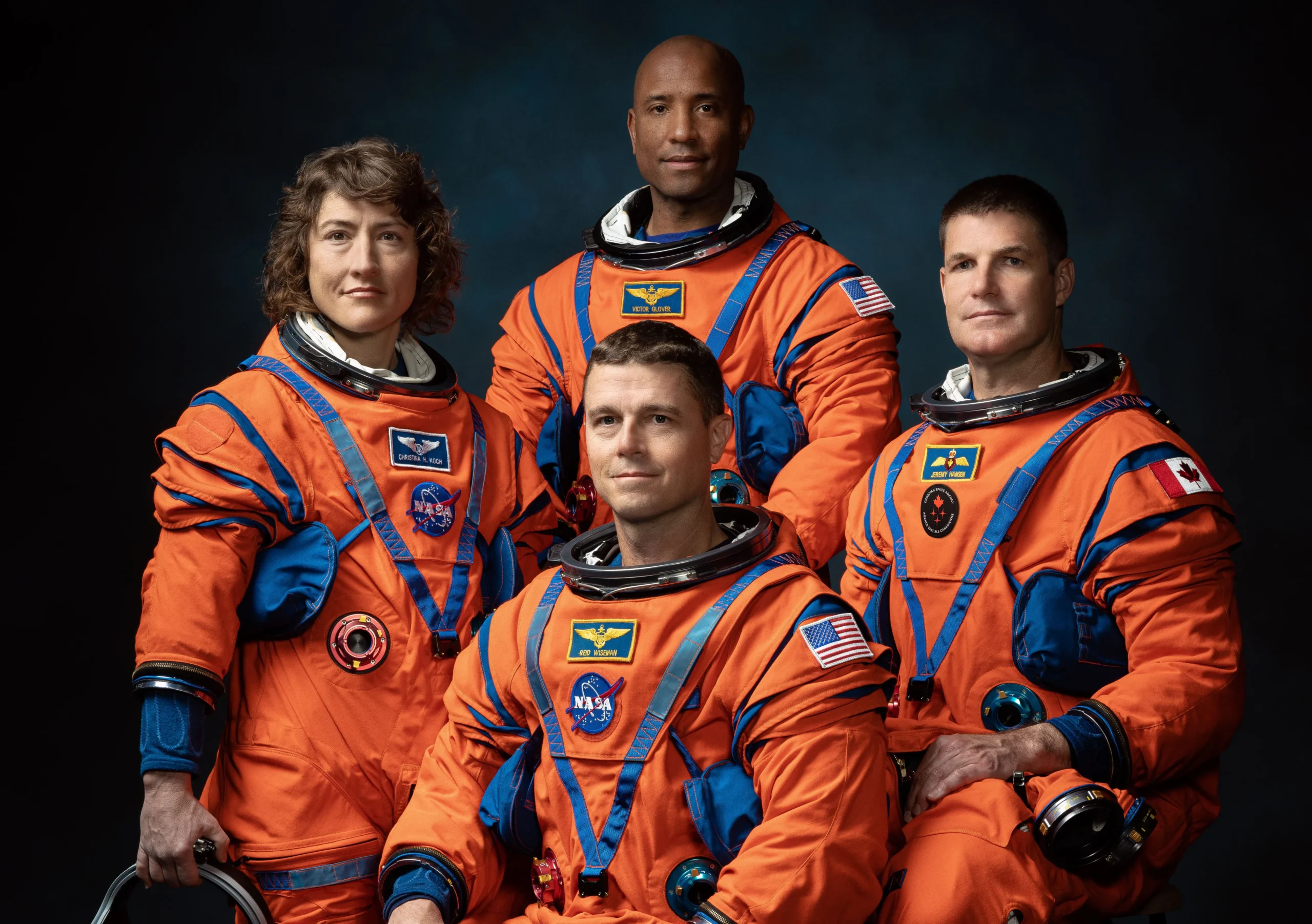
The Artemis II crew – Reid Wiseman, Victor Glover, Christina Koch, and Jeremy Hansen – was selected not only for their qualifications, but for how their expertise fits together as a cohesive unit.
Reid Wiseman, Commander
- Former U.S. Navy test pilot and NASA astronaut
- Systems engineering background
- Previous ISS experience
Victor Glover, Pilot
- U.S. Navy aviator and test pilot
- Flight test and systems engineering expertise
- Flew on SpaceX Crew-1
Christina Koch, Mission Specialist
- Electrical engineer and physicist
- Conducted research in extreme environments
- Completed a 328-day ISS mission
Jeremy Hansen, Mission Specialist
- Royal Canadian Air Force fighter pilot
- Canadian Space Agency astronaut
What These Backgrounds Have in Common
Although each astronaut followed a different path, their experience reflects a shared foundation:
- Advanced STEM education
- High-performance operational experience
- Systems-level problem-solving
- Team-based mission execution
These qualities are essential for deep space missions, where crews must operate independently and adapt in real time.
This structure is mirrored in analog environments like MDRS. In the MDRS Crew 182 Final Mission Report (November 2017), a multidisciplinary team of scientists and engineers conducted parallel research projects, demonstrating how combining different areas of expertise strengthens mission outcomes.
Working Together in High-Performance Environments
Crew cohesion is one of the defining factors of mission success.
Artemis II astronauts emphasized the importance of communication, trust, and shared responsibility while living and working in confined conditions. These same dynamics are consistently documented in analog missions.
For example, the Final Mission Summary – MDRS Crew 315 (May 2025) describes how a group of individuals with different backgrounds developed strong working relationships through daily planning meetings, shared responsibilities, and coordinated task execution.
This coordination becomes especially visible during EVA operations. In a Crew 315 EVA Report from May 2025, crew members conducted a rover-supported EVA with clearly defined roles, navigation plans, and time constraints, while maintaining continuous communication with the habitat. The report documents how tasks, timelines, and safety procedures were structured in advance, highlighting the same type of coordination and decision-making required during real spacewalks.
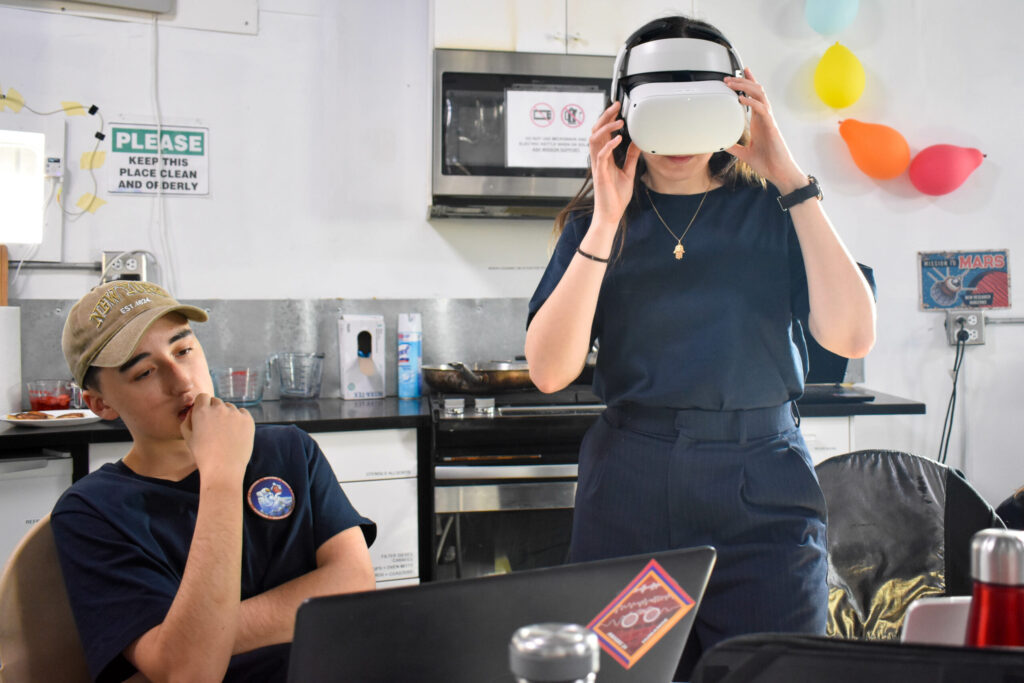
Daily routines at MDRS, including morning briefings, scheduled EVAs, and coordinated research activities, reinforce structured teamwork and operational discipline.
A Model for Future Exploration
Artemis II also reflects a broader shift in how space exploration is conducted, bringing together astronauts from different backgrounds and national agencies.
Analog missions reinforce this same model. At MDRS, crews are not only multidisciplinary but also responsible for managing multiple mission elements at once, including:
- Scientific research
- Habitat systems monitoring
- EVA operations
- Communication and reporting
Reports from across MDRS field seasons show that this integration of roles is essential to mission success. In analog environments, individuals are rarely confined to a single specialty, they must operate across systems while maintaining coordination with the rest of the crew.
Why Crew Composition Matters
Artemis II is often described as a test mission, but its most important outcomes are human.
It demonstrates:
- How crews operate together in deep space
- How defined roles support mission success
- How communication and trust shape performance
Across both spaceflight and analog missions, one conclusion is clear: mission success is not determined by individual expertise alone, but by how well a crew functions as an integrated system.
MDRS provides a practical model for this. Through documented crew reports, mission summaries, and EVA logs, it shows how diverse teams adapt, collaborate, and sustain performance in environments designed to simulate Mars.